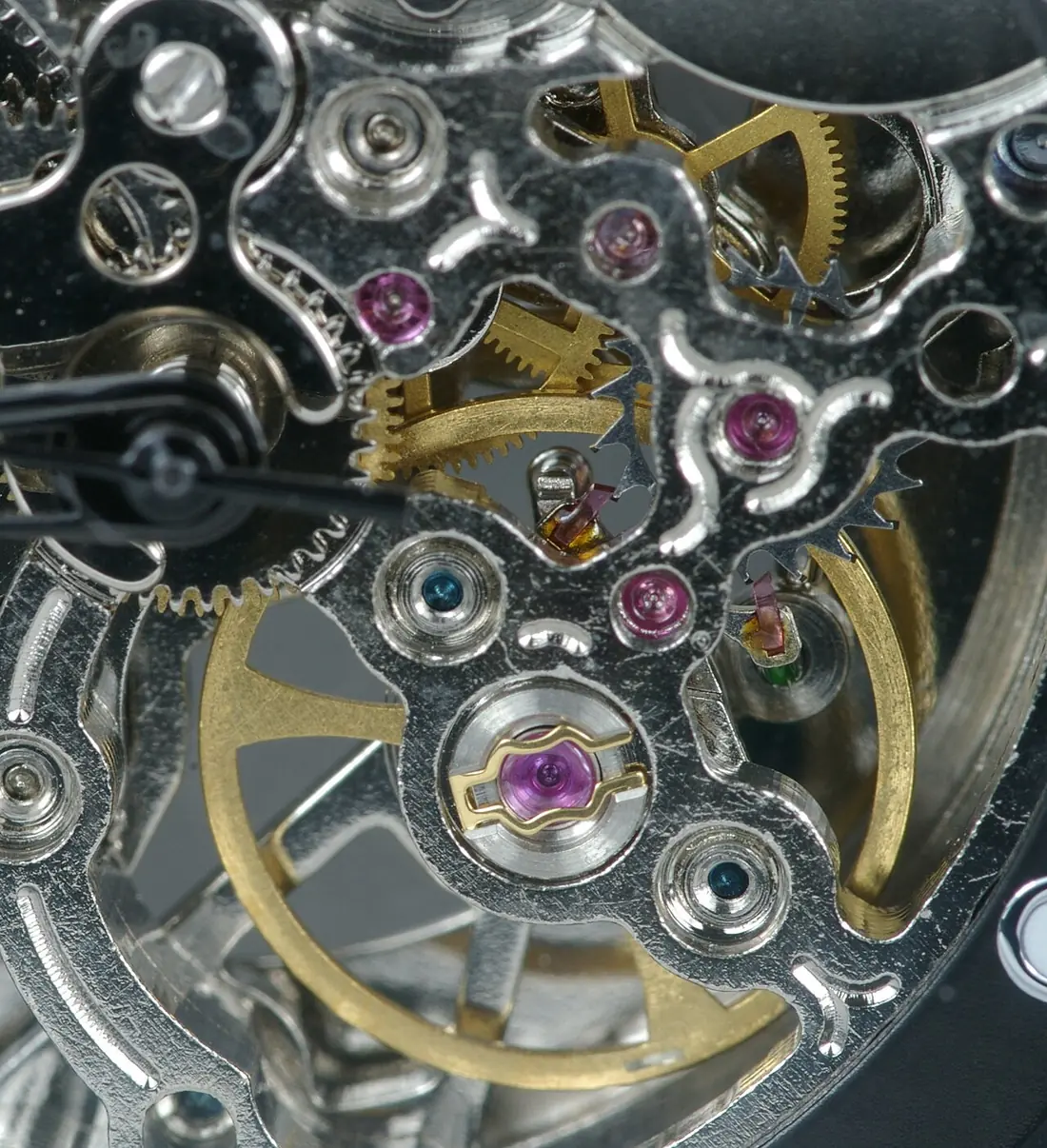
Your phone is accurate because it asks a network of atomic clocks what time it is. Your mechanical watch is accurate because a wheel the size of a lentil swings back and forth eight times a second, in a metal case, on a moving wrist, at whatever temperature the day happens to be. Judged against the phone, every mechanical watch is broken. Judged against what it is, a few seconds a day is a small miracle — and knowing which few seconds are normal tells you whether you need a five-minute adjustment or a five-hundred-pound service.
Measure your rate properly
Set the watch against an accurate reference, leave it a few days, then enter how far it has drifted. Days matter: one night tells you almost nothing, a week tells you the truth.
Bands reflect general expectations for a mechanical watch in good order. Certified chronometers are tested to tighter limits — Omega describes the ISO 3159 chronometer standard as −4/+6 seconds a day, or −5/+8 for smaller calibres, and Rolex advertises −2/+2 for its own certification after casing. Quartz plays a different game entirely: ordinary quartz drifts around fifteen seconds a month, and thermocompensated quartz a few seconds a year.
How to do the measurement properly
- Set it against an atomic reference, not another watch. Hack the seconds hand to the exact minute.
- Wear it as you normally do. A rate measured on a desk is not the rate you will experience.
- Rest it in the same position every night — dial up, for example — because position changes the rate on its own.
- Check at the same time of day, and record the deviation rather than resetting it.
- Average over five to seven days. A single day can be off by several seconds for reasons that mean nothing.
Why it drifts: the five real causes
Tap the symptom that matches yours.
Magnetism
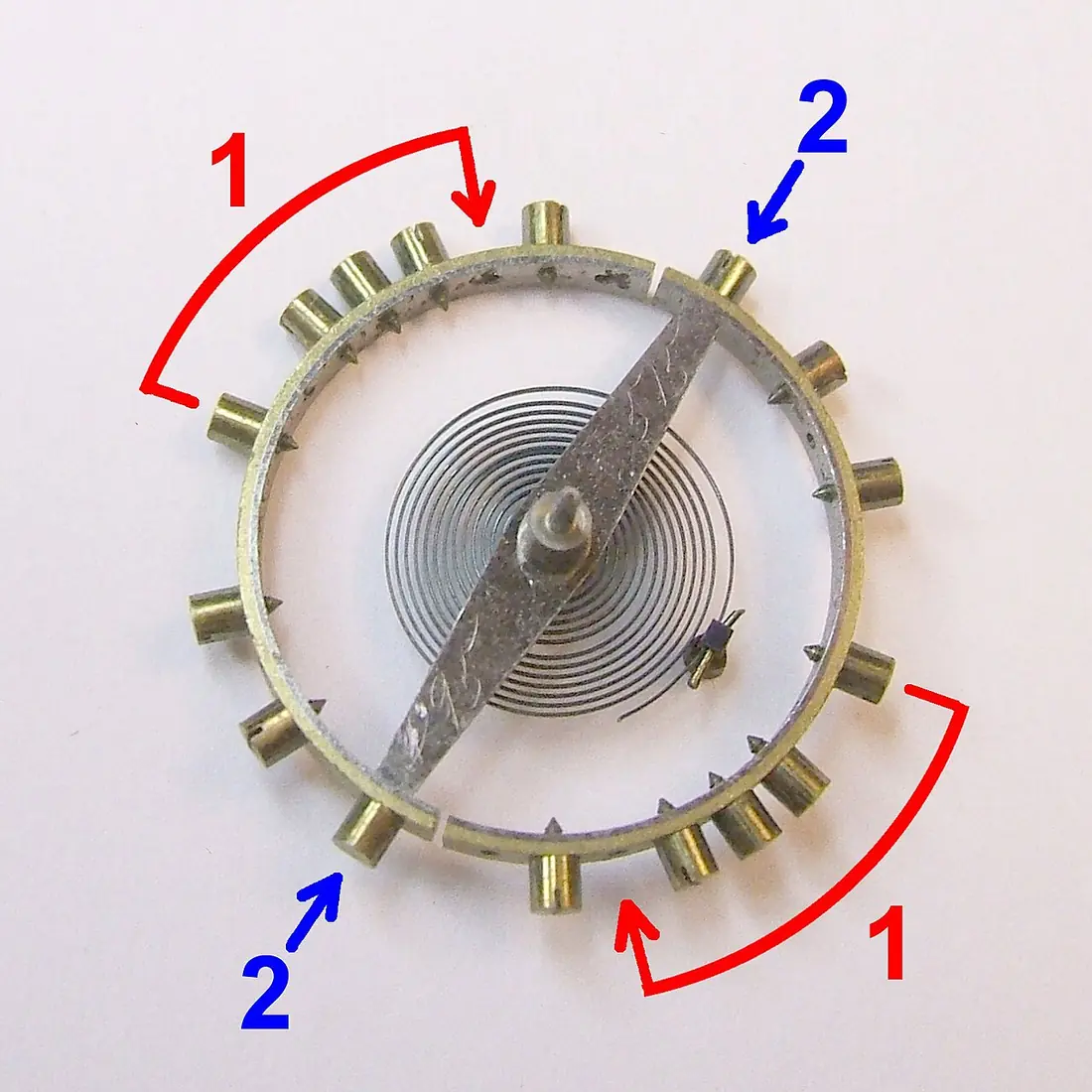
Fix: minutes, almost freeBy far the most common cause of a watch that was fine last week and now gains a minute a day. Phone cases, laptop lids, handbag clasps and speakers all carry magnets strong enough to magnetise a hairspring; its coils then cling together, shortening the effective spring and speeding the watch up. Any watchmaker can demagnetise it in seconds, often while you wait.
The trick nobody tells you
A mechanical watch does not have one rate — it has several, depending on how gravity pulls on the balance. The same watch might gain eight seconds a day lying dial-up and lose three sitting crown-down. Since it spends every night in whatever position you leave it, you can cancel out part of your daytime error for free: if your watch runs fast, rest it overnight in the position where it runs slowest, and vice versa. Try dial-up, dial-down and crown-down for a few nights each and keep the one that lands closest to zero.
Rate is what you notice; amplitude is what matters. A watch keeping perfect time on weak, tired oil is a watch about to become an expensive repair.
Regulate, demagnetise, or service?
One warning about servicing that costs collectors real money: ask explicitly for no polishing. A well-meaning polish rounds the case edges and erases the crisp lines that make a vintage watch valuable — the only condition damage on this page that is genuinely irreversible. See also what actually drives a watch’s value.
What a timing machine tells your watchmaker
- Rate — seconds per day, measured in several positions rather than one. This is the number you feel.
- Amplitude — how far the balance swings. The real health indicator: low amplitude means dirt, dry oil, or a tired mainspring, and it shows up long before the watch starts obviously misbehaving.
- Beat error — whether the swings are symmetrical. A high beat error makes a watch fussy about starting and unstable in different positions.
That is why “it keeps good time” is not the same as “it doesn’t need a service”. A movement can compensate its way to a decent rate while its lubricants turn to varnish and its pivots wear.
Not sure which movement is inside yours? Watch Scanner & Valuator can suggest the model and reference from a photo, which is how you find the manufacturer’s own accuracy specification rather than guessing from a forum. What your specific watch is doing today, though, only a timing machine can answer.
- Normal mechanical
- Roughly −10 to +20 seconds a day, worn
- Well regulated
- Within about ±5 seconds a day
- Certified chronometer
- −4/+6 a day, tested before casing
- Ordinary quartz
- About ±15 seconds a month
- Sudden change
- Suspect magnetism first, always
- Service interval
- Every 5–7 years, and never with polishing
The takeaway
Measure over a week, not a night. Compare the number against what your movement was actually built to do, not against your phone. If the rate is consistent, it’s a regulation job or a free trick with overnight positions; if it changed suddenly, demagnetise before you panic; and if it wanders day to day or the watch stops early, that’s the movement asking for a service. A mechanical watch that runs a few seconds off is working exactly as designed — the drift is the sound of it being a machine rather than a signal.
At a glance
| Watch | Typical rate |
|---|---|
| Ordinary quartz | About ±15 seconds a month |
| Mechanical, normal | About −10 to +20 seconds a day, worn |
| Mechanical, well regulated | Within about ±5 seconds a day |
| COSC chronometer | −4 to +6 seconds a day (movement tested before casing) |
| Rolex Superlative Chronometer | About −2 to +2 seconds a day, cased |
Frequently asked questions
Why is my automatic watch running fast?
The most common cause of a sudden gain of minutes a day is magnetism from speakers, laptops, phone cases or bag clasps. Other causes are a knock, old oils needing service, or position and temperature.
How do I measure my watch’s accuracy?
Set it exactly to a reliable time source, wear it normally, and compare after three to seven days. Divide the difference by the number of days.
Can a watch be regulated without a full service?
Often, yes. A watchmaker can adjust the rate on a timing machine in minutes if the movement is otherwise healthy.
Does position affect accuracy?
Yes. Gravity acts on the balance differently dial-up, dial-down and crown-up, so how you leave the watch overnight can nudge its rate.
Sources and further reading
- COSC — Swiss Official Chronometer Testing Institute — COSC
- Chronometer watch — Wikipedia
- Mechanical watch — Wikipedia
Links checked September 14, 2026.
Explore the apps
Fast, fun, AI-powered apps with 1M+ on the App Store. Find your next favorite.
Browse all apps