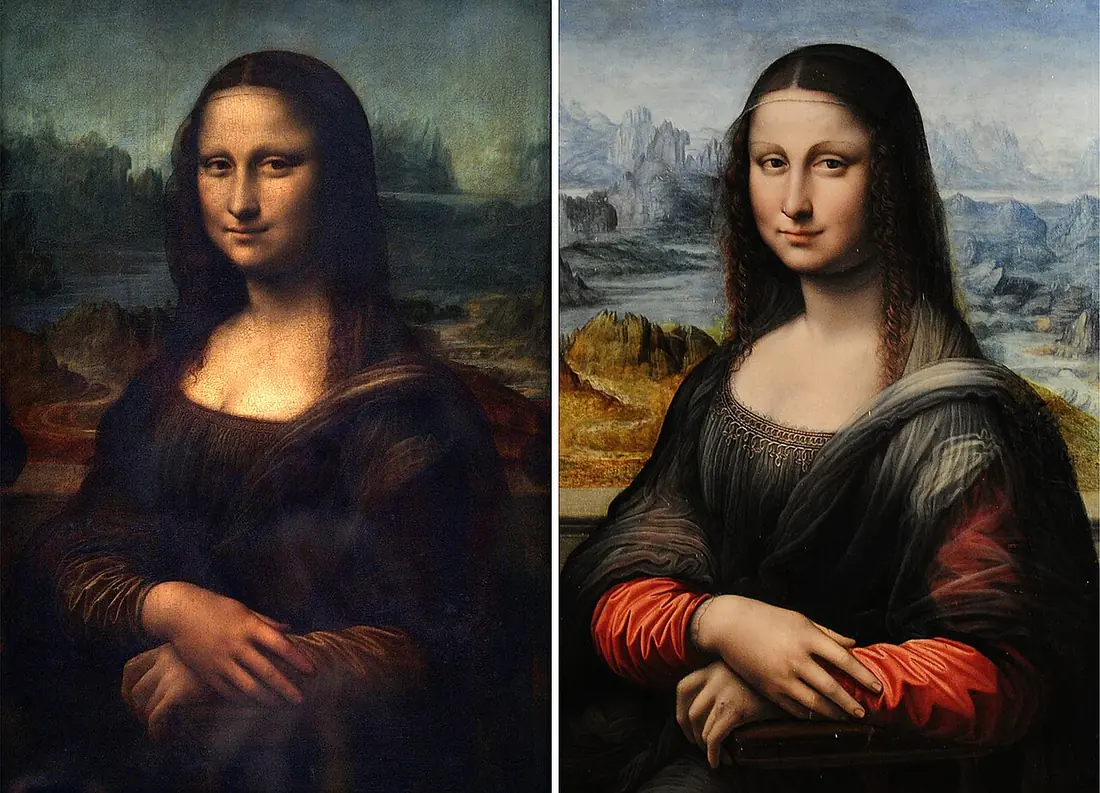
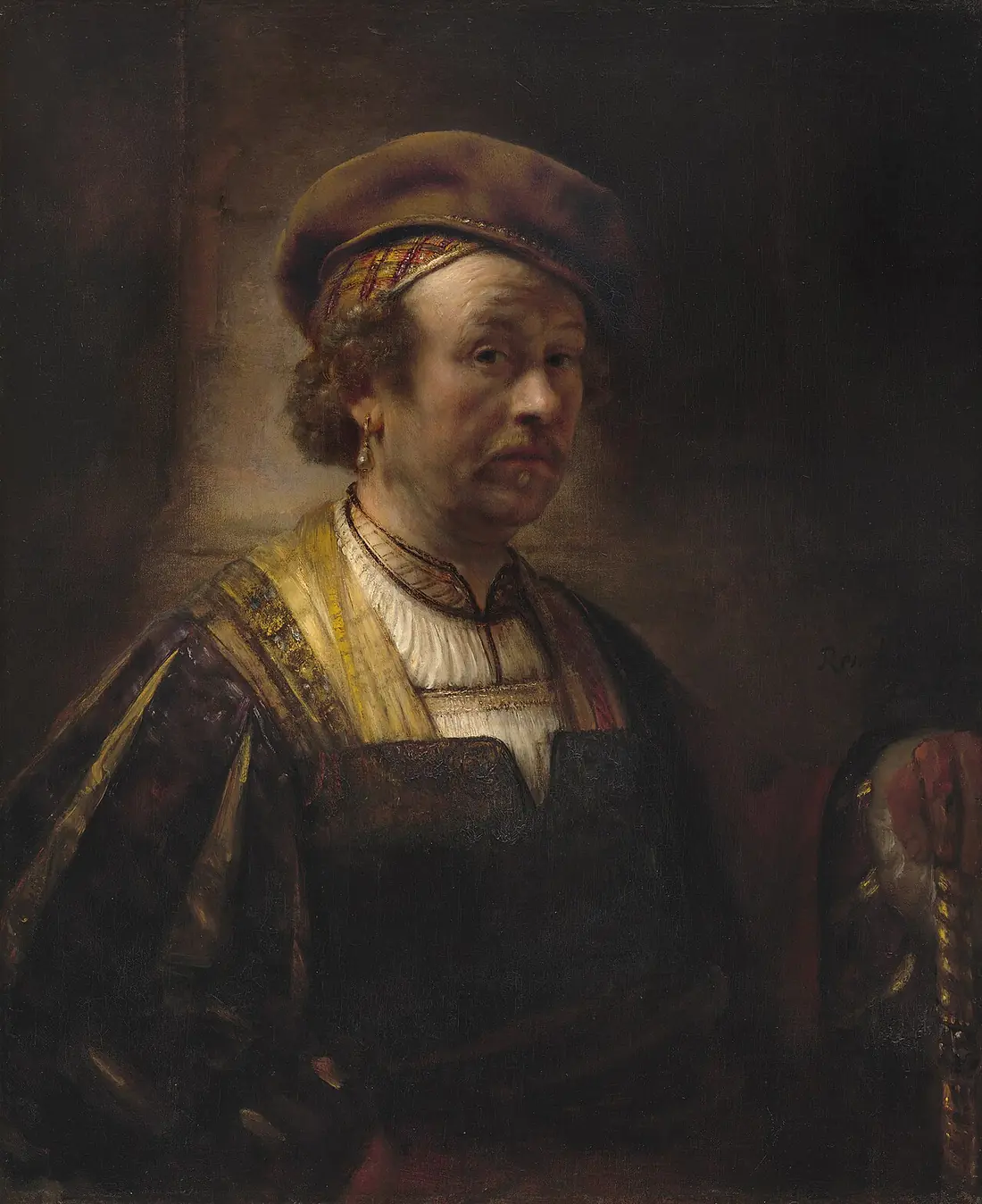
Auction catalogues look like they are describing paintings. They are actually making legal statements about doubt. “Rembrandt van Rijn”, “Attributed to Rembrandt”, “Studio of Rembrandt”, “After Rembrandt” — these are not decorative variations on a theme, they are calibrated positions on a ladder of confidence, and each rung down can move the price by an order of magnitude. Learn the ladder and a catalogue becomes readable: you will know what the house is claiming, what it is refusing to claim, and where the risk sits.
The attribution ladder
Tap a rung. The wording is house convention rather than law — Christie’s, Sotheby’s and Bonhams each publish their own glossary, and the definitions vary slightly — but the hierarchy below is the shared skeleton that the whole market reads.
The artist’s full name
The strongest statement a catalogue makes: in the house’s opinion this is a work by the named artist. It is still an opinion rather than a fact, but it is the only rung normally covered by the limited authenticity warranty in the conditions of sale.
The meter is our plain-language reading of the wording, not a published statistic. Always read the actual glossary printed in the catalogue you’re bidding from — and the warranty clause, which usually applies only to the header line, not to anything in the essay below it.
Why one word moves the price so far
Because the market pays for certainty, not for beauty. Two panels can be the same age, the same subject, the same quality of paint, and differ enormously in price purely because scholarship accepts one and hesitates on the other. A “circle of” picture can be a superb seventeenth-century painting and still trade for a small fraction of a signed work, and an “after” can be a beautifully executed nineteenth-century copy that any wall would be happy to carry — priced as decoration, because that is the honest category.
Signed, or “bears signature”?
The second vocabulary that decides prices sits in the small line under the dimensions. Tap any term.
The house believes the signature was applied by the artist. It is a positive statement, and it is one of the reasons the lot can sit under the artist’s full name.
How attributions actually move
Attributions are not fixed. Pictures climb and fall the ladder constantly, and the mechanisms are knowable:
- Connoisseurship. A recognised specialist looks at handling, drawing, and the way an ear or a hand is built up. Still the single most decisive factor in Old Masters.
- Technical analysis. X-radiography and infrared reveal underdrawing and changes; pigment analysis catches materials invented after the supposed date; dendrochronology dates the panel; canvas weave matching can tie a painting to a bolt of cloth used in a specific studio.
- The catalogue raisonné. Inclusion in the accepted scholarly catalogue of an artist’s work is, commercially, close to decisive. Exclusion is very hard to argue with.
- Foundations and committees. For many modern artists an authentication board or estate is the gatekeeper — and several have stopped issuing opinions altogether after litigation, which freezes borderline works out of the market.
- Provenance. A documented chain of ownership back toward the artist supports everything else, and a gap in the right decade undermines it. See why provenance drives value.
Score the evidence in front of you
Before you fall in love with a “sleeper”, count what you actually have. Tick everything that is documented rather than hoped for.
Nothing ticked. At this point you are buying a picture, not an attribution — so pay a picture price.
Buy what is in front of you at the price of the wording on the label. If you are paying for the artist’s name, you should be paying for the evidence that carries the name — not for the hope of it.
Reading a catalogue entry in order
- The header name. Which rung of the ladder is this, and is the warranty attached to it?
- The medium and support. “Oil on panel” versus “oil on canvas laid down on board” is a condition and date clue in six words.
- The inscription line. Signed, or bears a signature?
- Provenance. Look for the gaps, not the famous names. Anything vague around 1933–1945 needs proper answers.
- Literature and exhibited. Empty sections are a quiet statement that no scholar has engaged with the picture.
- The essay. Read the hedges. “Almost certainly”, “traditionally identified as”, “the present work relates to” are all doing careful work.
- The condition report. Request it in writing. Heavy restoration can quietly remove most of what you thought you were buying.
Trying to work out what you’re looking at? Art Scan: Painting Identifier can suggest the likely artist, period and style from a photograph and put the work in its art-historical context. Use it to generate the right questions — an attribution is settled by specialists, technical evidence and documents, not by a camera.
- Full name
- In the house’s opinion, by the artist
- Attributed to
- Probably by the artist, less certainty
- Studio of
- Made in the artist’s workshop, another hand
- Circle of
- Unidentified contemporary, close association
- Manner of
- In the style, of a later date
- After
- A copy of a known work, any date
- Bears signature
- There is a signature. That’s all it says
The takeaway
The catalogue is telling you the truth; it just does it in a code that takes ten minutes to learn. Read the header name as a confidence level, read the inscription line as a second and separate claim, then read the provenance and literature to see whether anybody has ever tested either. Do that and the lower rungs stop looking like bargains-in-waiting and start looking like what they are — good paintings, honestly labelled, priced for the doubt they carry.
At a glance
| Catalogue wording | What the house is saying |
|---|---|
| Artist’s full name | In our opinion, a work by the artist |
| Attributed to | Probably by the artist, with less certainty |
| Studio of / Workshop of | By an unknown hand in the studio, possibly under supervision |
| Circle of | By an unknown hand, of the period, closely associated |
| Follower of / Style of | By a painter working in the style, contemporary or slightly later |
| Manner of | In the style, but of a later date |
| After | A copy of a known work |
| Signed / Bears signature | Signature is by the artist / signature may not be |
Frequently asked questions
What does “attributed to” mean in art?
That the cataloguer believes the work is probably by the named artist but is not certain enough to give the name outright.
Is “circle of” worth less than “studio of”?
Usually. “Studio of” places the work in the artist’s own workshop; “circle of” only links it to the artist’s period and influence.
Can an attribution change?
Yes, in both directions. New research, technical analysis or a specialist’s opinion can upgrade a “circle of” work to the artist — or downgrade a famous picture.
Where are these terms defined?
In the “explanation of cataloguing practice” or glossary printed in each auction house’s catalogues and conditions of sale. Definitions differ slightly by house.
Sources and further reading
- Art forgery — Wikipedia
- Auction — Wikipedia
- Provenance — Wikipedia
Links checked September 14, 2026.
Explore the apps
34 fast, fun, AI-powered apps with 1M+ on the App Store. Find your next favorite.
Browse all apps