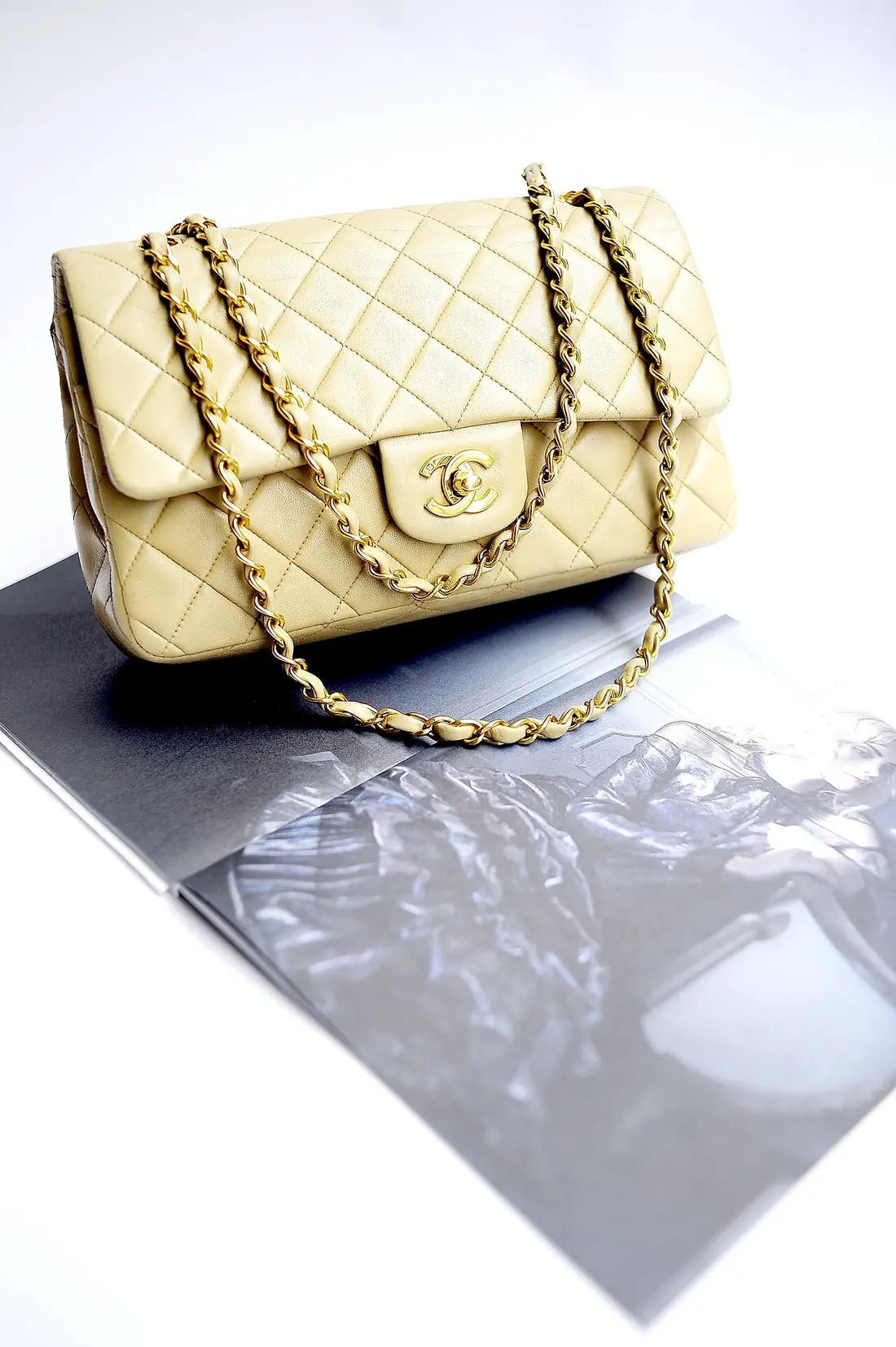
Almost every bag that arrives at a resale platform with heartbreaking damage was not damaged in the street. It was damaged in a cupboard: hung by its handles until the attachment stretched, sealed in the plastic it came home in until mould bloomed inside, propped in the sunlight until one side faded two shades, or left empty and unsupported until the front slumped forward and stayed that way. Storage is the cheapest thing you can get right and the most expensive thing to get wrong.
What bad storage does, month by month
Drag the timeline. This is a shelf in a warm, humid, sunlit room — the ordinary conditions of an ordinary bedroom.
Day one
Structure crisp, colour even, hardware bright. Everything from here is avoidable — none of what follows is about how often you carry it.
Accumulated, avoidable damageThe five habits that quietly destroy bags
- Plastic. Sealed plastic traps humidity against leather and grows mould from the inside out. It also sticks to coated canvas and patent in heat. Use the cotton dust bag; a clean cotton pillowcase is a perfect substitute if yours is lost.
- Hanging by the handles. Months of the bag’s own weight stretch the handle attachments and distort the top line. Shelve it upright instead, or lay flat bags flat.
- Storing it empty. Unsupported sides collapse and the fold sets permanently. Stuff it — lightly — until it holds its intended shape.
- Sunlight. A bag on a windowsill fades unevenly, and light leathers yellow. The fade is permanent and it always lands on the side facing the window.
- Heat and damp. Attics, radiators, and bathrooms are the three worst addresses in the house. Heat dries and cracks; damp grows mould; the swing between them delaminates coated canvas.
Get the details right
Tap any item for what to actually do.
Stuffing
Fill the bag until it holds its shape without straining the seams. Acid-free tissue, bubble wrap, or a small cushion all work. Avoid newspaper — the ink transfers onto lining and light leather — and avoid coloured tissue against pale interiors for the same reason.
Not: stuffing so hard the flap strains, or leaving it hollow.
Score your own closet
Tick everything that is true of where your bags live right now.
Every item above is free to fix. Most take a single evening for an entire collection.
Leather is skin. It wants moderate humidity, air, no direct sun, and a shape to hold. Everything in a good storage routine follows from that one sentence.
Material by material
- Vachetta & untreated leather
- Keep out of light and water. Sun creates uneven darkening; droplets leave permanent spots
- Lambskin
- Stuff generously, store alone. It creases and scars with pressure from neighbours
- Coated canvas
- Hates heat. Warm cupboards lift the coating at corners and piping
- Patent
- Store away from dyed fabric and other bags — it absorbs colour transfer permanently
- Suede & nubuck
- Brush only, never condition. Absorbs damp and odour faster than anything else
- Exotics
- Need humidity most of all; dry air lifts scales. Keep flat, unstacked, never in a sealed bag
Rescue, if it has already happened
- Mould. Take it outside, brush the surface dry with a soft cloth, and let it air in the shade — not the sun. Then take it to a professional. Water and cleaning sprays drive spores deeper into the lining.
- Smell. Air it for days, then try an open box of baking soda or activated charcoal beside the bag rather than inside it. Deep smoke and mildew odour in a fabric lining is often permanent.
- Collapsed shape. Stuff it firmly and leave it upright for weeks. Structured leather often recovers; coated canvas creases usually don’t.
- Dry, thirsty leather. A tiny amount of a conditioner made for the leather type, tested somewhere invisible first. Less is genuinely more — over-conditioning darkens and clogs the grain.
- Handle darkening. Professional cleaning only. This is the one every home remedy makes visibly worse.
Keep the paperwork with the bag
Boxes, dust bags, cards, receipts and any authentication paperwork belong in the same place as the bag itself, because a full set genuinely lifts resale value — and because the date stamp and receipt frame what wear is reasonable for its age. If you plan to sell one day, photograph the corners, base and interior while everything still looks good; it is the fastest listing you will ever write. The grading language buyers will use is covered in condition grades decoded.
Not sure what a bag in your closet is worth protecting? Handbag Authentication scans a bag to suggest what it is and roughly what it’s worth — a useful reality check on which pieces deserve the good shelf, the stuffing and the annual attention.
The takeaway
Cotton, not plastic. Shelved, not hung. Stuffed, not hollow. Out of the sun, away from radiators and bathrooms, with the chain wrapped and the pockets empty. That is the whole routine, it costs nothing, and it is the difference between a bag that grades “Excellent” in ten years and one that grades “Fair” in three.
At a glance
| Do | Don’t |
|---|---|
| Stuff with acid-free paper or a pillow insert | Use newspaper (ink transfers) |
| Use a breathable cotton dust bag | Seal in plastic (traps moisture, causes mold) |
| Store upright on a shelf | Hang by handles or stack bags |
| Keep 45–55% humidity, away from sun | Store in attics, basements or near radiators |
| Wrap or remove chains and straps | Let hardware press into leather |
| Keep receipts and cards together | Separate paperwork from the bag |
Frequently asked questions
Should designer bags be kept in dust bags?
Yes. Cotton or flannel dust bags protect from dust and light while letting leather breathe.
How do I stop my bag from getting moldy?
Avoid plastic and damp spaces, keep humidity moderate, and air bags occasionally. Silica gel packets can help in humid climates.
Can I store bags in their original boxes?
Boxes are fine if the bag is stuffed and in its dust bag, but check periodically — closed boxes can trap humidity and hide problems.
How do I keep patent leather from sticking?
Keep it in its own dust bag, away from other materials and heat. Patent leather can transfer color and stick to other surfaces.
Sources and further reading
- Caring for Your Treasures — American Institute for Conservation
Links checked September 14, 2026.
Explore the apps
Fast, fun, AI-powered apps with 1M+ on the App Store. Find your next favorite.
Browse all apps