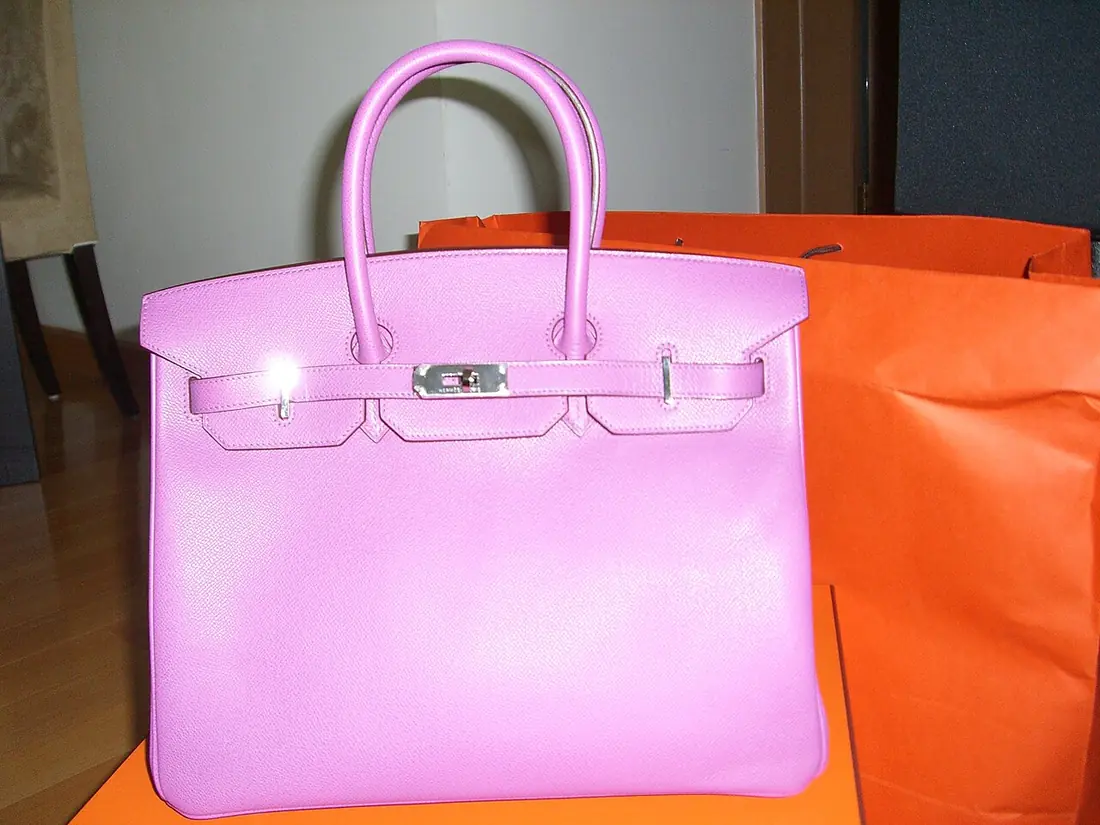
Two listings, same bag, same year, same colour. One says “Excellent”, the other says “Rank AB”, and they’re £900 apart. Neither word means anything on its own, because condition grading in luxury resale is not a standard — it’s a house style. Fashionphile publishes seven ratings of its own; The RealReal sorts items into Pristine, Excellent, Very Good, Good and Fair; Japanese resellers use letter ranks from N down to D. The grade is a summary written by someone who wants to sell the bag. The photographs of the corners are the actual report.
Where bags actually fail
Wear is not random — it lands in the same six places on almost every bag ever made. Tap a marker to see what to look for and whether it can be put right.
Corners
The first thing to fail and the first thing a grader looks at. Check for rubbing, fuzzing, colour loss, and — the serious one — whether the material has worn through to the layer underneath. Corners take the impact every time the bag is set down, and coated canvas corners rub down to raw board.
Often repairableTranslating the grades
Every platform’s ladder maps roughly onto the same reality. Tap a grade for what it usually means in practice — and what it tends to do to the price.
Pristine, New, Rank N–S
95–100% of best priceUnused or genuinely indistinguishable from unused: crisp corners, unmarked lining, protective film sometimes still on the hardware. At this level you should expect the full set — box, dust bag, cards, receipt — because that packaging is part of what you’re paying for.
Percentage bands are indicative, relative to a strong price for that model in top condition — not a guarantee. Rare colours, discontinued models and full sets compress the discount; common models in soft demand widen it.
Grade the bag yourself
Work through the list against the seller’s photographs. If a line can’t be checked because the photo doesn’t exist, assume the flaw is there and ask.
Nothing flagged. Negotiate on price and authenticity, not condition.
Smell and structure are the two flaws that don’t come out. Everything else is a quote from a leather workshop — so price the bag as the sum of its repairs, not as the grade on the listing.
Materials decide what goes wrong
- Coated canvas is tough on the surface and weak at the edges: corners rub through, and heat can make the coating lift away from the backing. Delamination is not economically repairable.
- Vachetta and other untreated leathers darken with use. An even honey patina is desirable and normal; water spots, sun stripes and grey stains are not, and they’re very hard to reverse.
- Lambskin looks extraordinary and scars if you look at it wrong. Expect scuffs and wrinkles; they can rarely be fully removed.
- Grained and pebbled leathers — caviar, Epsom, Togo, saffiano — hide wear best and hold structure longest. The value-per-year champions.
- Patent transfers colour from other surfaces onto itself and can craze with age. Check where the bag sat against jeans.
- Suede and canvas linings absorb everything, which is why interior odour is often the deal-breaker rather than the exterior.
- Exotics add paperwork: cross-border sales of protected species need CITES permits, and lifted scales or dried-out skin are permanent.
Fixable, expensive, or final
- Usually fixable
- Edge paint, corner patching, stitching, zip pulls, feet, hardware replating
- Costly but possible
- Handle replacement, lining replacement, full re-dye, restitching a strap
- Effectively final
- Delaminated coated canvas, deep water staining, mildew smell, collapsed structure
- Adds value back
- Box, dust bag, cards, receipt, an unusual colour, current-season hardware
One thing worth knowing before you commission work: some brand ateliers may decline to service a bag that has been repaired elsewhere, and third-party restoration can affect how a resale platform grades it later. Ask before, not after.
What to demand from a seller
- All four corners, close up, in daylight. Not one artful three-quarter shot.
- The base, flat on. Feet, seams, and any sag show here first.
- The interior, wide open, with the pocket pulled out. Ask directly and in writing: does it smell of anything?
- The hardware, unpolished. Engravings should be crisp; plating loss shows on the underside of the lock and clasp.
- The date code, stamp, or serial. Both for authenticity and because age frames what wear is reasonable — see how date codes work.
- Whether it has been restored, and by whom. A disclosed professional repair is a fact you can price. An undisclosed one is a reason to walk.
Sizing up a listing before you commit? Handbag Authentication scans a bag to suggest what it is and roughly what it’s worth, which is a fast way to sanity-check an asking price against the condition you can see in the photos. For a final answer on authenticity, a professional authentication service is still the step that matters.
The takeaway
Ignore the adjective and read the evidence. Corners, base, handles, hardware, lining, edges — six places, six photographs, and you can grade a bag as well as most listings do. Then split the flaws into repairs you can price and damage nobody can undo. A “Good” bag with clean structure and no smell is frequently the smartest buy on the page; an “Excellent” one with a mildew note buried in the description is the most expensive mistake.
At a glance
| Grade | Japanese-style rank | What it means | Typical pricing |
|---|---|---|---|
| New / Pristine | N–S | Unused or indistinguishable from new | Near top of market |
| Excellent | A | Minimal signs of use | High |
| Very Good | AB | Light wear to corners or handles | Mid-high |
| Good | B | Visible wear, patina, small marks | Mid |
| Fair | C | Heavy wear, stains, loss of shape | Low |
| As-is / Flawed | D | Damage needing repair | Lowest |
Frequently asked questions
What does Rank AB mean for a used bag?
Used mainly by Japanese resellers, Rank AB means a bag in good used condition with some visible wear — roughly equivalent to “Very Good”.
Which flaws lower a bag’s value the most?
Worn-through corners, cracked or peeling leather, water stains, strong odors and interior damage. Scratched hardware and light patina matter less.
Can corner wear be repaired?
Specialist leather restorers can recolor and seal worn corners; fully worn-through canvas corners are harder and may need replacement parts.
What photos should I ask a seller for?
All four corners, handles and handle bases, edges, hardware close-ups, the interior and stamps, the base, and the bag in natural light.
Sources and further reading
- Caring for Your Treasures — American Institute for Conservation
- Counterfeit consumer goods — Wikipedia
Links checked September 14, 2026.
Explore the apps
Fast, fun, AI-powered apps with 1M+ on the App Store. Find your next favorite.
Browse all apps