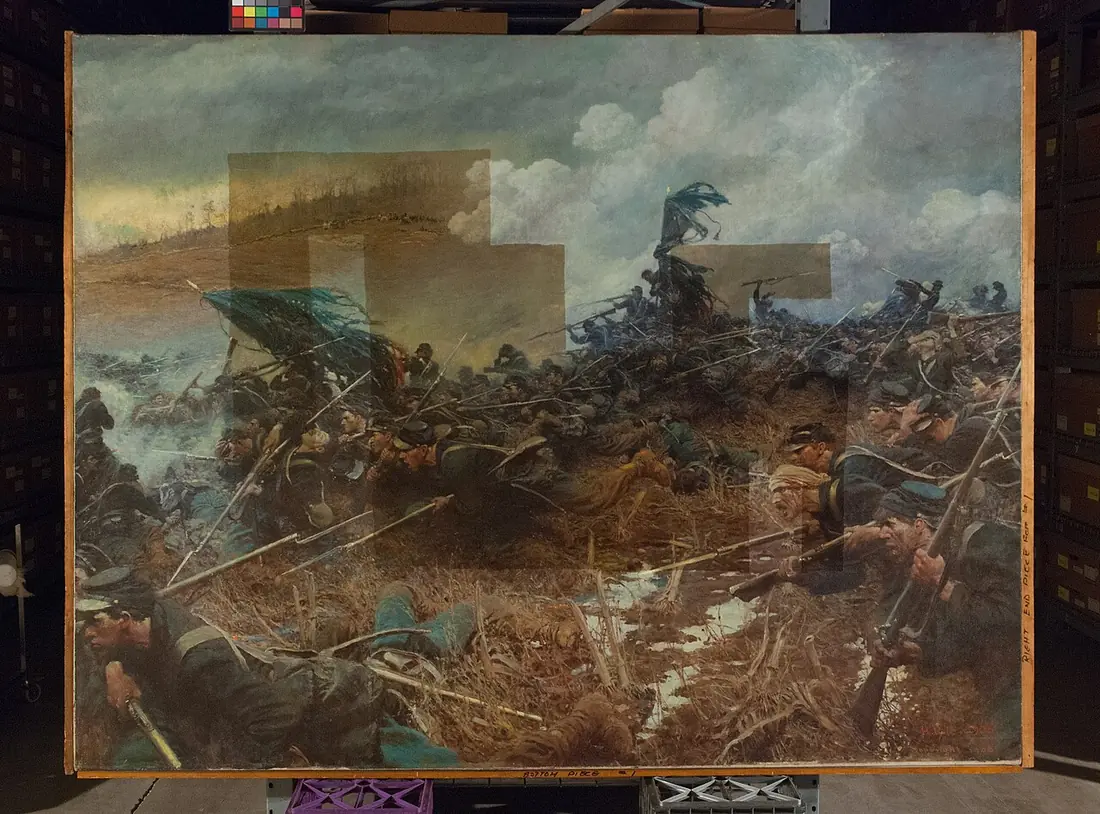
Ask a dealer what makes two paintings by the same artist, of the same subject, the same year and the same size differ in price by four times, and the answer is usually not scholarship. It’s condition. A picture can be entirely genuine and still be half modern paint, flattened by an old restoration, and scrubbed of its glazes. Condition is the part of a painting’s value you can actually inspect yourself — and the part that catalogue photography is best at hiding.
The damage vocabulary, illustrated
Tap a term. Each one shows what the surface looks like, whether it is stable or active, and what it does to value.
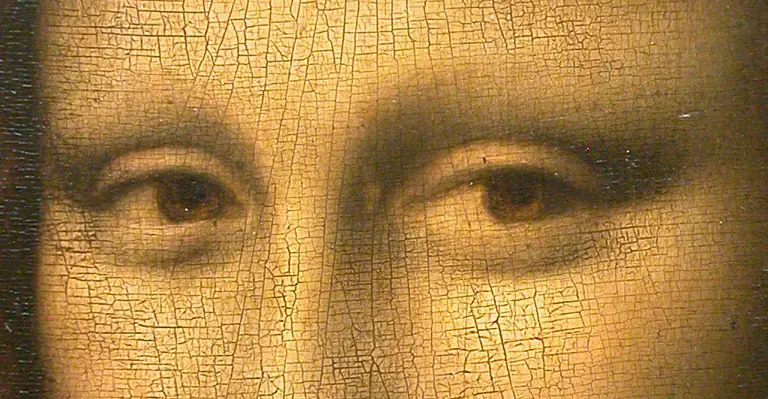
Craquelure
Normal for ageThe network of fine cracks that forms as oil paint and its support age at different rates. On a genuinely old picture it should be there — an eighteenth-century panel with a perfectly smooth surface is a question, not a comfort. What matters is whether the cracks are stable and closed, or open with lifting edges.
Value: neutral. Expected, and part of what tells you the picture is old.
Four lights, four different pictures
Conservators don’t guess; they change the light. Each one answers a specific question, and the first two cost almost nothing.
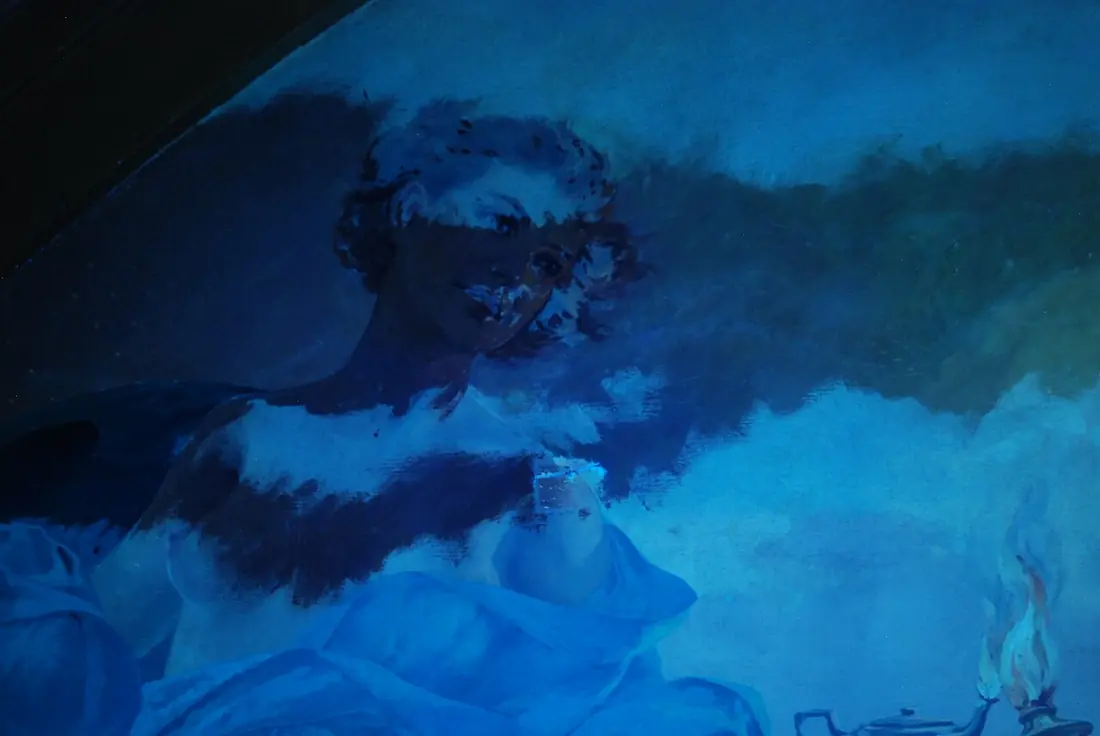
Ask for the UV images. A seller who has them and won’t send them has told you what they show, and a seller who has never taken them is selling a picture they haven’t examined.
Score a picture before you bid
Tick what the condition report, the photographs, or your own torch tells you. The weighting reflects how the market actually discounts each problem.
Tick what applies. Note that the first and last items are common and cheap to live with — the expensive words are “overpaint” and “skinned”.
A guide to the questions, not a valuation. Weightings reflect general market behaviour; a rare picture by a major name forgives far more than a decorative one by a minor hand.
What restoration does to price
- Honest, minimal, reversible work is fine. Filled losses in a background, retouching that stays within the loss, a fresh varnish — these are maintenance, and no old painting is without them.
- Overpaint is different from retouching. Retouching fills a hole; overpaint covers original paint that was still there. It is the single most damaging thing a previous owner can have paid for.
- “Skinned” is close to fatal. Aggressive cleaning removes the thin final glazes that carried the modelling and depth. Nothing brings them back, and the picture will always look flat next to a good example.
- Relining is a discount, not a disaster. It stabilised thousands of paintings, but old hot-iron methods crushed impasto. Many collectors will pay a premium for an unlined canvas for exactly this reason.
- Location beats quantity. Two percent of loss across a sitter’s face costs more than twenty percent in a dark corner.
- Works on paper have their own list: foxing, mat burn, light staining, tape residue, and trimming inside the platemark — that last one can halve the value of a print.
Getting a real condition report
- Request it in writing before bidding. Auction houses provide them on request, and the report — not the catalogue photograph — is what describes the object.
- Ask specifically for UV images and a raking-light shot. Also ask whether the picture has been lined and when it was last restored.
- Read for omissions. “Appears to be in good overall condition” with no mention of retouching means nobody looked with a lamp.
- Get your own opinion on anything expensive. An independent conservator’s inspection costs a small fraction of the hammer price and will tell you, in an hour, what a decade of ownership would.
- Never test or clean it yourself. Solvents, bread, onions, and every other internet remedy remove original paint. See how to care for an oil painting safely.
Working out what you’re looking at first? Art Scan: Painting Identifier suggests the likely artist, period and style from a photograph, with the context around it. Condition, though, is a physical examination: torch, UV lamp, and ideally a conservator standing in front of the actual object.
- Expected with age
- Craquelure, some retouching, an old varnish
- Urgent
- Cupping, tenting, active flaking — it is losing paint now
- Worst for value
- Overpaint on the focal point, and a skinned surface
- Cheap fix
- Varnish removal and replacement, by a professional
- Free tools
- A phone torch at a raking angle, and a UV lamp
- Always request
- The condition report plus UV images
The takeaway
Learn six words — craquelure, cupping, loss, overpaint, lining, skinned — and you can read most of what a painting has been through. Shine a torch across the surface, ask for the UV photographs, and price the picture in front of you rather than the one in the catalogue. The best buys in any sale are usually honest, untouched pictures under dirty varnish; the traps are the ones that look suspiciously fresh for their age.
At a glance
| Term | What it means | Concern level |
|---|---|---|
| Craquelure | Network of fine cracks from aging | Normal if stable |
| Cupping / tenting | Paint flakes lifting at the edges | Needs attention |
| Losses | Missing paint or ground | Depends on size and location |
| Retouching / inpainting | Restorer’s paint confined to losses | Acceptable if limited |
| Overpaint | Paint covering original paint | Serious on focal areas |
| Relined | New canvas attached to the back | Common in old masters; check why |
| Discolored varnish | Yellowed surface coating | Usually reversible |
Frequently asked questions
Does restoration lower a painting’s value?
Sympathetic, reversible conservation often protects value. Heavy retouching or overpaint — especially over faces or signatures — lowers it.
What does a UV lamp show on a painting?
Old varnish glows a greenish color; recent retouching usually appears as dark patches on top. It maps restoration but needs interpretation.
What is a condition report?
A written description of a work’s physical state, provided by auction houses, dealers or conservators. Ask for one — with UV photos — before bidding on anything valuable.
Is craquelure bad?
Not by itself. Stable, age-appropriate cracking is expected on old oil paintings. Cracks with lifting edges or paint loss are the problem.
Sources and further reading
- Find a Conservator — American Institute for Conservation
- Art conservation and restoration — Wikipedia
- Craquelure — Wikipedia
Links checked September 14, 2026.
Explore the apps
Fast, fun, AI-powered apps with 1M+ on the App Store. Find your next favorite.
Browse all apps