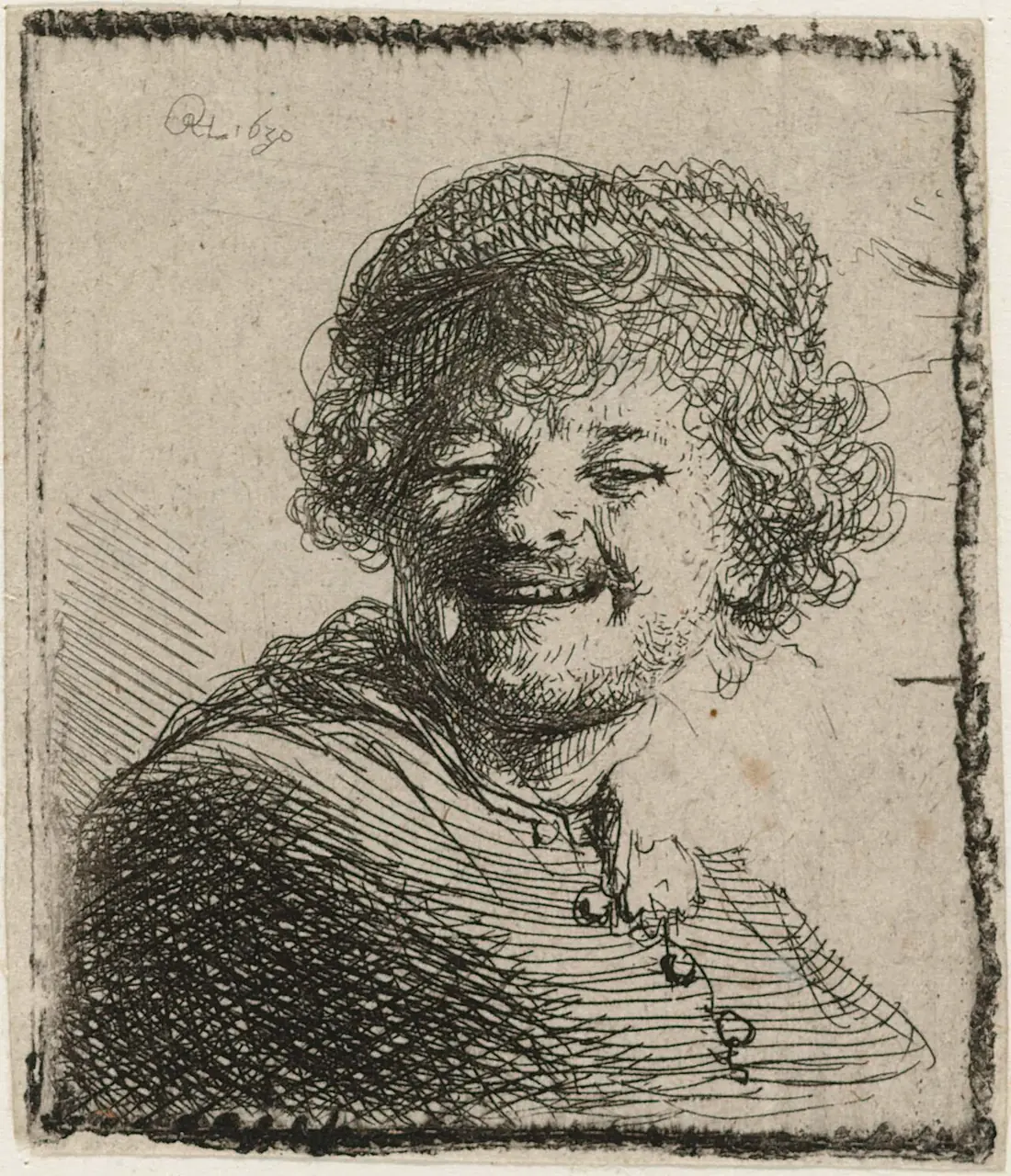
Two prints hang side by side in a gallery. Same image, same size, same frame. One is $200 and the other is $2,000. Nothing about the picture explains the gap — the explanation is written in pencil along the bottom edge, in a small code of fractions and initials that most buyers never learn to read. Once you can read it, the entire print market makes sense.
What “limited edition” is supposed to mean
A genuine limited edition is a fixed number of impressions pulled from the same matrix — a plate, stone, screen, or digital file — after which the matrix is cancelled or destroyed so no more can be made. The scarcity is the product. The number under the image, written as a fraction like 12/150, means this is impression 12 out of a total edition of 150. The second number is the one that matters for value: an edition of 25 is a very different object from an edition of 5,000.
Beware the phrase “open edition” or, worse, “limited to the number sold in the first year.” Those are marketing constructions with no scarcity behind them, and they behave like posters in the resale market.
Reading the marks
- 12/150 — numbered impression within the edition.
- A/P or AP — artist’s proof, retained by the artist, traditionally about 10 percent of the edition size and often priced higher.
- P/P — printer’s proof, kept by the workshop.
- H/C (hors commerce) — “outside of commerce,” originally not for sale, used as samples.
- E/A (épreuve d’artiste) — the French equivalent of an artist’s proof.
- B/A/T (bon à tirer) — “good to print,” the single approved reference impression. Usually the most valuable of all.
- T/P — trial proof, pulled while the artist was still adjusting.
One myth to drop: a low number does not mean higher quality. In screenprinting and lithography, impressions are typically numbered after the whole edition is printed and inspected, so 3/150 and 140/150 are the same object. Collectors do sometimes pay a small premium for single digits anyway — that’s sentiment, not craft.
The processes, and why they’re priced differently
- Etching and engraving — lines are cut or bitten into a metal plate. Look for a plate mark, the slightly embossed rectangle where the plate pressed into damp paper, and for ink sitting physically raised on the surface.
- Lithograph — drawn on stone or plate; a true hand-pulled lithograph has soft, crayon-like tonal areas. Note that “offset lithograph” is a commercial reproduction, a very different thing sold under a confusingly similar name.
- Screenprint / serigraph — ink pushed through a mesh, one layer per colour. Flat, saturated colour with slightly raised, crisp edges.
- Woodcut and linocut — carved relief blocks; bold shapes and visible grain or gouge marks.
- Giclée — a high-quality inkjet print. It can be a legitimate original medium when the artist made the work digitally, but it’s also the format most used to reproduce an existing painting. Under a loupe you’ll see a fine dot spray rather than ink structure.
The question isn’t “is it a print?” — many of the most important works in art history are prints. The question is whether the print is an original made as a print, or a photographic reproduction of something else.
Original print vs reproduction
An original print was conceived and executed as a print: the artist worked the matrix, the impression is the artwork, and there is no “original painting” it copies. A reproduction photographs an existing work and prints it, sometimes with a signature added afterwards. Reproductions can be lovely wall art and are usually worth roughly what a nice frame costs. The clues: a fine, regular dot pattern under magnification, no plate mark, no ink relief, and paper that feels machine-smooth rather than like heavy cotton rag with a deckle edge.
Signatures, and the trap of “signed in the plate”
A hand signature in pencil in the lower margin is the standard for a signed edition — graphite because it can’t be reproduced by a printing press, so its presence is evidence. “Signed in the plate” means the signature was part of the image itself and got printed along with everything else on every single copy. It carries no authentication value at all, and listings that lean on the word “signed” without saying which kind are doing so on purpose.
What drives the price
- Edition size — the single biggest factor. Smaller is scarcer.
- Artist demand — as with any market.
- Hand signature — versus unsigned or plate-signed.
- Condition — foxing (rusty spots), light-fading, wavy paper, trimmed margins, and acid burn from a cheap mat all cut value hard.
- Paper and margins — full original margins and a visible watermark or chop mark are worth real money.
- Documentation — a certificate of authenticity from the publisher or the artist’s estate, ideally with a catalogue raisonné reference.
Two practical care notes, since condition is where most print value quietly dies: frame with acid-free, museum-grade mats and backing, and keep prints out of direct sunlight. Fading is permanent and unrestorable.
Not sure what you’re looking at? Art Scan: Painting Identifier analyzes a photo to suggest the artist, style, and period, with context on the movement. Handy for identifying an unfamiliar image before you dig into the edition marks yourself.
- 12/150
- Impression 12 of an edition of 150
- Low numbers
- No quality advantage — usually numbered after printing
- Signed in plate
- Printed, not hand-signed. No added value
- Plate mark
- Embossed border — sign of an intaglio print
- Value killer
- Fading, foxing, and trimmed margins
The takeaway
“Limited edition” on its own means nothing — limited to what is the real question. Check the edition size before the number, verify the signature is graphite rather than printed, work out whether you’re holding an original print or a photograph of a painting, and inspect the margins and paper as carefully as the image. Learn to read the pencil, and you’ll stop paying original-print prices for very nicely framed reproductions.
At a glance
| Mark | Meaning |
|---|---|
| 12/150 | Impression 12 of an edition of 150 |
| A/P or AP | Artist’s proof, outside the numbered edition |
| P/P, H/C, T/P | Printer’s proof, hors commerce, trial proof |
| Signed in pencil | Hand-signed by the artist |
| Signed in the plate | Signature reproduced as part of the image |
| Chop / blind stamp | Embossed mark of the printer or publisher |
Frequently asked questions
Is a lower edition number more valuable?
Generally no. In screenprinting and lithography, impressions are usually numbered after the whole edition is printed, so 3/150 and 140/150 are equivalent.
What is the difference between an original print and a reproduction?
An original print is made as a print, by or under the artist’s supervision, using a printmaking process. A reproduction photographically copies an existing artwork.
Are artist’s proofs worth more?
Sometimes a little, because they are fewer. For most prints the difference is small compared with condition and edition size.
What does “signed in the plate” mean?
The signature was part of the printing plate or image, so it is printed rather than hand-signed. Hand-signed impressions are usually worth more.
Sources and further reading
- Edition — Tate
- Print — Tate
- International Fine Print Dealers Association — IFPDA
- Printmaking — Wikipedia
Links checked September 14, 2026.
Explore the apps
Fast, fun, AI-powered apps with 1M+ on the App Store. Find your next favorite.
Browse all apps