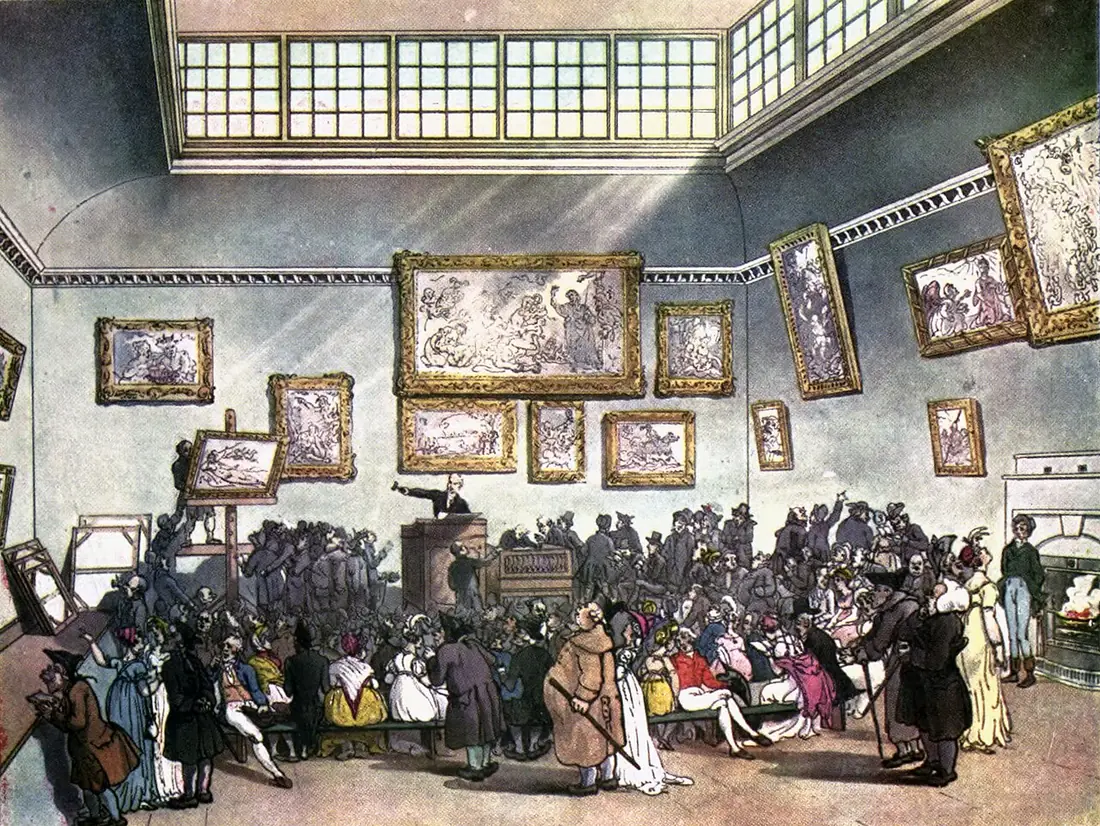
Auction results make headlines because they sound so clean: hammer falls, number announced, painting sold. The reality behind that number is a stack of fees, private agreements, and a bit of theatre — and the first-time bidder who doesn’t know about them gets an unpleasant surprise on the invoice. Win a lot at $10,000 and you can easily owe closer to $12,600. Here’s how the whole machine actually works, before you raise a paddle.
The estimate is a marketing tool
Every lot carries a low and high estimate — say “$8,000 to $12,000.” People read this as an appraisal. It isn’t. It’s the house’s judgement of where bidding will land, set partly to attract interest: estimates are often pitched deliberately low to draw a crowd and create competition. A lot selling at three times its high estimate isn’t necessarily a bargain missed; it may just have been advertised cheaply on purpose.
The reserve is the real floor
The reserve is the confidential minimum the seller will accept. It’s never published, but by convention it sits at or below the low estimate. Until bidding passes the reserve, the lot cannot be sold — and the auctioneer is permitted to place bids on behalf of the seller to move things upward, a practice known as chandelier bidding. That’s why early bids sometimes seem to come from nowhere. If the reserve is never met, the lot is “bought in” or passed, and goes home unsold.
The buyer’s premium: the fee that surprises everyone
This is the big one. On top of the hammer price, the buyer pays the auction house a buyer’s premium — commonly in the mid-20s as a percentage at major houses, on a sliding scale that drops for higher-value lots. Then add sales tax or VAT, which in many jurisdictions is charged on the premium as well. So:
- Hammer price — what the auctioneer’s hammer falls at.
- + Buyer’s premium — the house’s cut from you.
- + Tax — often applied to hammer and premium together.
- + Shipping, insurance, storage — and for larger works, crating, which is rarely cheap.
- + Artist’s resale right — in some countries a royalty is owed to the artist or their estate.
The seller is paying too, out of the same sale: a seller’s commission plus charges for photography, cataloguing, and insurance. The house collects from both ends, which is exactly why the estimate was set to encourage a fight.
Work out your maximum total spend first, then back the premium and tax out of it to find your real hammer limit. Bidders who set their ceiling at the hammer price always overspend.
How the bidding itself runs
The auctioneer opens below the reserve and works up in increments of roughly 10 percent, adjusting on the fly. You can bid in the room, by phone with a staff member relaying, live online, or by leaving an absentee bid — a written maximum the house executes on your behalf, bidding only as high as necessary to win. Absentee bidding is the most disciplined way in: it caps you at a number you chose while calm rather than one you chose mid-adrenaline.
You’ll usually need to register and provide identification or a deposit in advance, and a winning bid is a binding contract. There is no cooling-off period and no returns because you changed your mind.
Read the condition report and the small print
Auction lots are sold “as is.” The catalogue description carries carefully coded weight, and the difference between phrasings is enormous:
- “Rembrandt” — the house believes it’s by the artist.
- “Attributed to” — probably, but with real doubt.
- “Studio of” / “Circle of” — by someone close to the artist, not the artist.
- “After” — a later copy of a known work.
- “Bears signature” — there’s a signature; the house isn’t vouching for it.
Always request the separate condition report, which covers restoration, relining, overpainting, and damage that a flattering catalogue photograph won’t show. For anything significant, view it in person or send someone who can.
Where the value actually sits
Auction prices are driven less by beauty than by provenance, rarity, condition, and freshness to market. A work that hasn’t been offered publicly in decades excites buyers; one that failed to sell last year is now “burned” and harder to move. Regional and online sales are where reasonable buying still happens — the same category of object often costs considerably less away from the flagship evening sales, because that’s where the competition isn’t.
Doing homework on a lot before the sale? Art Scan: Painting Identifier analyzes a photo to suggest the likely artist, style, and period, and fills in the movement and context. A quick way to orient yourself on a catalogue entry before you commission a specialist opinion.
- Estimate
- A marketing range, not an appraisal
- Reserve
- Confidential minimum, usually at or below low estimate
- Hammer price
- The bid, before any fees
- Buyer’s premium
- Added to hammer; sliding scale by value
- Sold as
- “As is” — no returns, binding contract
The takeaway
An auction is not a shop with exciting prices; it’s a fee structure with a stage. Treat the estimate as advertising, assume a reserve you can’t see, and build your bidding limit backwards from the total you’re willing to pay after premium, tax, and shipping. Read the catalogue wording like a lawyer, always pull the condition report, and consider an absentee bid so the room doesn’t do your arithmetic for you. Do that and auctions become one of the better places to buy art — rather than the most expensive way to learn how they work.
At a glance
| Term | Meaning |
|---|---|
| Estimate | The house’s published low–high guide price |
| Reserve | Confidential minimum, usually at or below the low estimate |
| Hammer price | The winning bid when the hammer falls |
| Buyer’s premium | Percentage added to the hammer, on a sliding scale |
| Seller’s commission | Percentage deducted from the seller’s proceeds |
| Bought in | Lot failed to reach its reserve and went unsold |
| Condition report | The house’s description of physical condition |
Frequently asked questions
What is a buyer’s premium?
A fee the buyer pays the auction house on top of the hammer price. At major houses the lowest tier is currently in the high 20s percent and falls for higher-value lots.
Can I bid online at major auctions?
Yes. Most houses offer online bidding after registration, which usually requires identification and sometimes a deposit or bank reference.
What happens if a lot doesn’t meet its reserve?
It is “bought in” and remains unsold. The seller may relist it, sell privately after the sale, or withdraw it.
Are auction estimates reliable?
They are a marketing tool as much as a forecast. Low estimates attract bidders; results can land well below or far above.
Sources and further reading
- Buyer's premium — Wikipedia
- Auction — Wikipedia
Links checked September 14, 2026.
Explore the apps
Fast, fun, AI-powered apps with 1M+ on the App Store. Find your next favorite.
Browse all apps