 💎 AI Tools
 Diamond identifier - AI Scan
Scan a diamond and get an instant read on its quality and value.
Built by Abdullah Yılmaz
Diamond Identifier is an AI-powered app that estimates a diamond’s key characteristics — color, clarity, cut, and approximate carat — from a photo, then gives you a ballpark value range. It’s built as a fast first step before a professional appraisal, not a replacement for one.
Point your phone at a loose stone or a set ring, capture a scan, and the app returns a plain-language breakdown of what it sees. It’s designed for buyers, sellers, and curious owners who want a quick, private sense of what they’re holding.
Screenshots
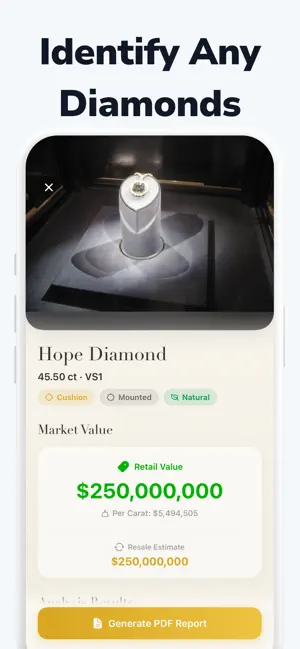
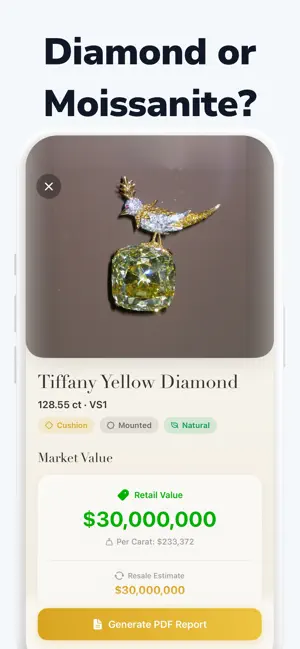
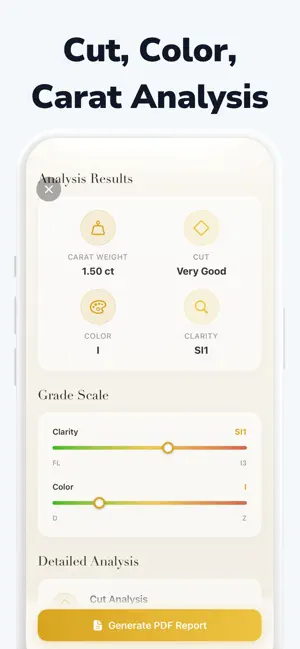


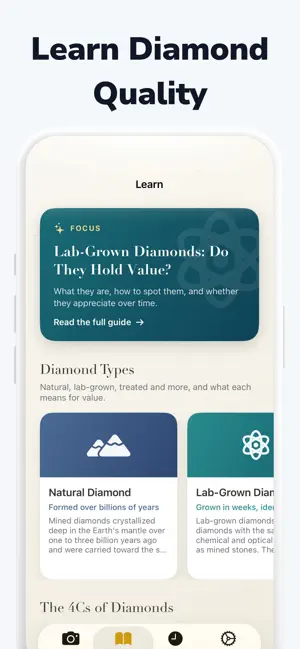
What it does
AI quality estimate
Gets an approximate read on the 4 Cs — color, clarity, cut, and carat — from a single scan.
Value range
Translates those characteristics into a rough market value range so you have a number to start from.
Works on rings too
Scan loose diamonds or stones already set in rings and jewelry.
Plain-language results
No gemology degree required — results are explained in everyday terms.
How to check a diamond in four steps
-
Clean the stone and use daylight
Wipe off skin oil, then photograph face-up in indirect daylight, as close as your camera focuses, with nothing reflecting in the stone.
-
Scan it
Diamond Identifier estimates color, clarity, cut and approximate carat, and turns them into a ballpark value range.
-
Run the quick home checks
The fog test and, for loose stones, the read-through test screen out glass and cubic zirconia. Neither rules out moissanite or lab-grown diamond.
-
Confirm with a jeweler or lab
A combination diamond/moissanite tester separates simulants; only a gem lab report confirms natural or lab-grown origin and the grades.
When to use it
- You inherited a ring and want a rough idea of what it’s worth before visiting a jeweler.
- You’re shopping and want a second opinion on a stone before you commit.
- You’re selling and need a starting point for negotiation.
- You’re simply curious about a diamond you already own.
What a photo scan can and can’t tell you about a diamond
| Question | From a photo | Needs a jeweler or lab |
|---|---|---|
| Shape and cut style | Yes | — |
| Approximate color and clarity | Estimate | Graded color and clarity |
| Carat weight | Rough estimate | Weighing loose, or measuring set |
| Diamond vs moissanite or CZ | Clues only | Diamond/moissanite tester |
| Natural vs lab-grown | No | Lab instruments and report |
| Treatments | No | Lab report |
| Value | Ballpark range | Appraisal |
Frequently asked questions
Is Diamond Identifier a substitute for a certified appraisal?
No. It gives a fast, AI-based estimate to orient you. For insurance, resale, or purchase decisions, always confirm with a certified gemologist and an official lab report (e.g. GIA).
Can it scan a diamond that’s already in a ring?
Yes. It works on both loose stones and diamonds set in rings and other jewelry.
What does it estimate?
It estimates the 4 Cs — color, clarity, cut, and approximate carat — and gives a rough value range based on those characteristics.
Which devices does it run on?
It’s available on the App Store for iPhone and iPad, and on Google Play for Android.
Can an app tell if a diamond is real?
No app can prove it from a photo. It can estimate appearance, and home tests screen out glass and cubic zirconia, but separating diamond from moissanite needs a tester and natural from lab-grown needs a lab.
How accurate is the carat estimate from a photo?
Approximate. Carat is weight, and depth hidden in a setting changes it; a jeweler weighs a loose stone or estimates a set one from measured millimetres.
What is a 1 carat diamond worth?
It varies by several times with cut, color, clarity and whether it is natural or lab-grown. Use the scan for a starting range and compare stones with the same grades on an independent report.
Does it work on lab-grown diamonds?
It estimates their appearance the same way, but it cannot tell you a stone is lab-grown. Check the report or the laser inscription on the girdle.
Sources and further reading
- The 4Cs of Diamond Quality — GIA (Gemological Institute of America)
- Diamond Description — GIA
- Diamond simulant — Wikipedia
- Synthetic diamond — Wikipedia
Links checked September 19, 2026.
Related reading
The Diamond Guide: Grading, Value and How to Tell If It’s Real — every guide on the topic, in reading order.
Try Diamond identifier - AI Scan
Scan diamonds to estimate quality and value with AI.